
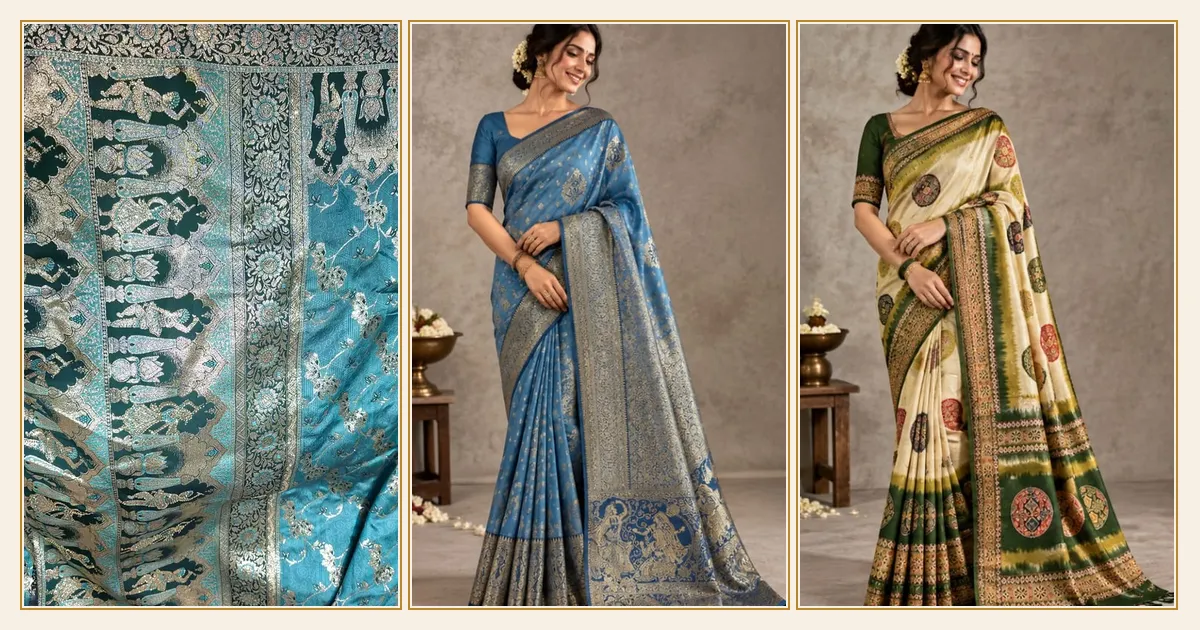
Diwali falls on Sunday, 8 November 2026, with Dhanteras two days earlier on Friday, 6 November. For most families that means a week of puja, visits to relatives, sweets, photos and at least one evening party. One saree rarely suits all of it. This guide walks you through choosing the right fabric for each occasion, the colours people traditionally wear, how to check silk and zari before you buy, and how to look after your saree once the diyas are put away.
Start with the occasion, not the saree
Before you fall for a design, think about where you will wear it and for how long.
Lakshmi puja at home
During puja you sit on the floor, bend to light diyas and move around the mandir. Choose a silk or silk-blend saree that drapes softly and is not too heavy to manage. Keep the pallu pinned at the shoulder so it stays away from the flames. This is also why many people prefer natural silk for puja: silk tends to smoulder and stop burning, while polyester can melt and stick to skin.
Family visits and Diwali milan
Going from house to house with mithai boxes can mean six or eight hours in one outfit. Here comfort matters more than heavy work. A light silk with small zari buttis and a good border looks festive in every photo without tiring you out.
Evening party or card night
Evenings are when you can wear richer zari, a heavier silk or a bold pallu. Warm lights and diyas make gold zari glow, so a saree with a wide woven border or a zari pallu really shines after sunset.
Colours traditionally worn for Diwali
There is no strict rule, but some colours are especially loved during the festival:
- Red and maroon are considered auspicious and are the classic choice for married women and for Lakshmi puja.
- Yellow and gold are linked with prosperity and look beautiful in diya light.
- Green stands for new beginnings and growth, which fits the start of the new year for many business families.
- Rani pink and magenta feel joyful and photograph very well at night.
- Firozi and other blues are a fresh choice if you want something different from the usual reds.
Many families prefer to avoid black or plain white for puja, so follow your own family custom. One practical tip: look at the saree in daylight as well as under the shop lights. Warm yellow lighting makes most colours look richer than they will in your photos.
How to check silk and zari quality in the shop
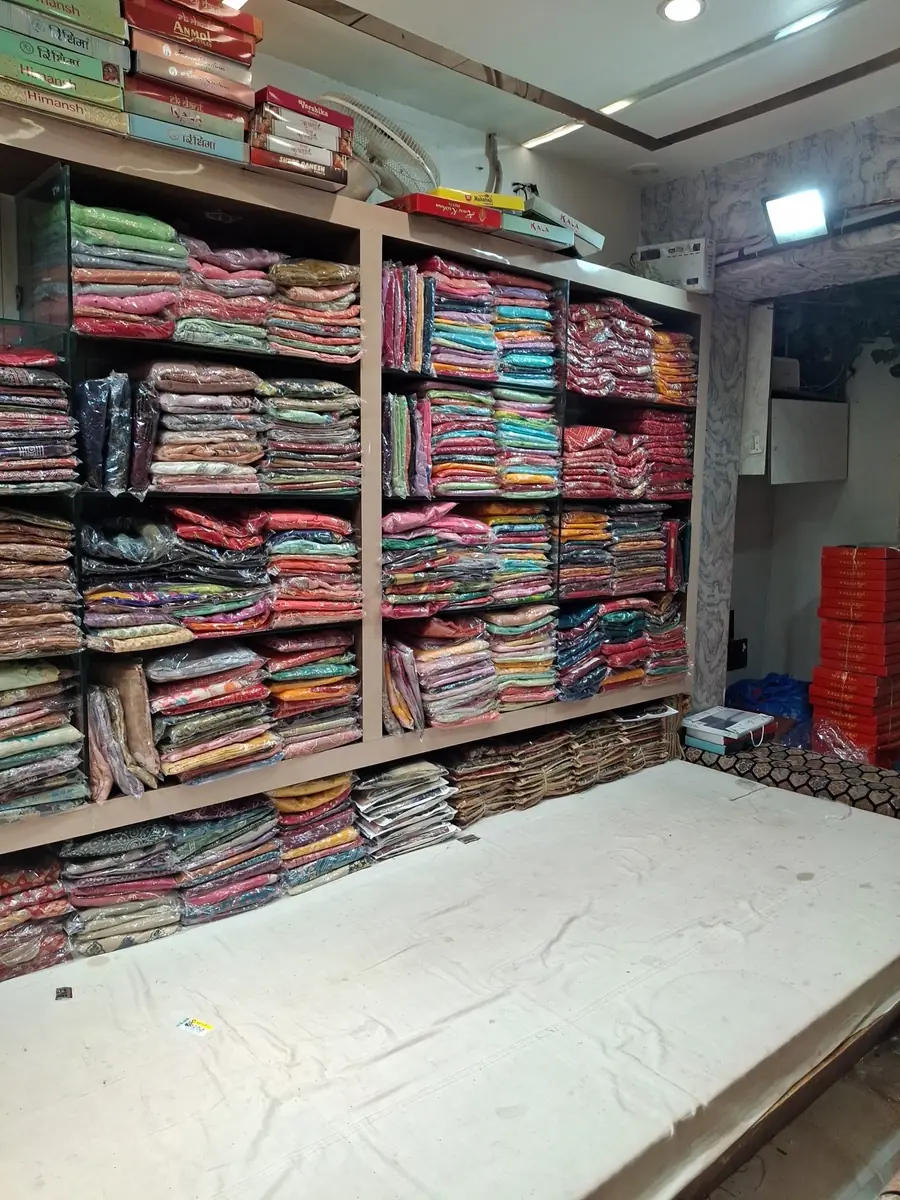
You do not need to be an expert to judge a good saree. A few simple checks in the shop tell you a lot:
- Feel the fabric. Real silk feels smooth and slightly warm in your hand, and it has a soft lustre whose colour shifts a little as you move it. Polyester usually feels cool and slippery, with a flat, even shine.
- Turn it over. In a woven design the pattern is part of the fabric, so you can see the threads of the design on the back as well. A printed design usually shows only on the front.
- Look closely at the zari. Zari is the metallic thread in the border and pallu. Good zari lies flat and feels soft rather than scratchy, and the design lines are even, without loose loops or gaps. Ask the shopkeeper what type of zari it is. Pure (real) zari is silver coated with gold and is the most expensive; most festive sarees today use tested zari, which is more affordable and still looks rich.
- Open it fully. Unfold the whole saree and check the border and pallu for pulled threads or uneven weaving, and ask whether a blouse piece is included.
- Look for the Silk Mark when you want pure silk. The Silk Mark label, issued under the Central Silk Board, is the official assurance that a saree is pure natural silk.
- Ask questions. A good shop will happily tell you the fabric name, how to wash it and what it is best worn for. If a seller cannot tell you what a saree is made of, take that as a sign to look elsewhere.
A burn test (silk smells like burnt hair and leaves a soft ash, polyester melts into a hard bead) is reliable, but do it at home on a loose thread, never on the saree itself.
Care tips for after the festival
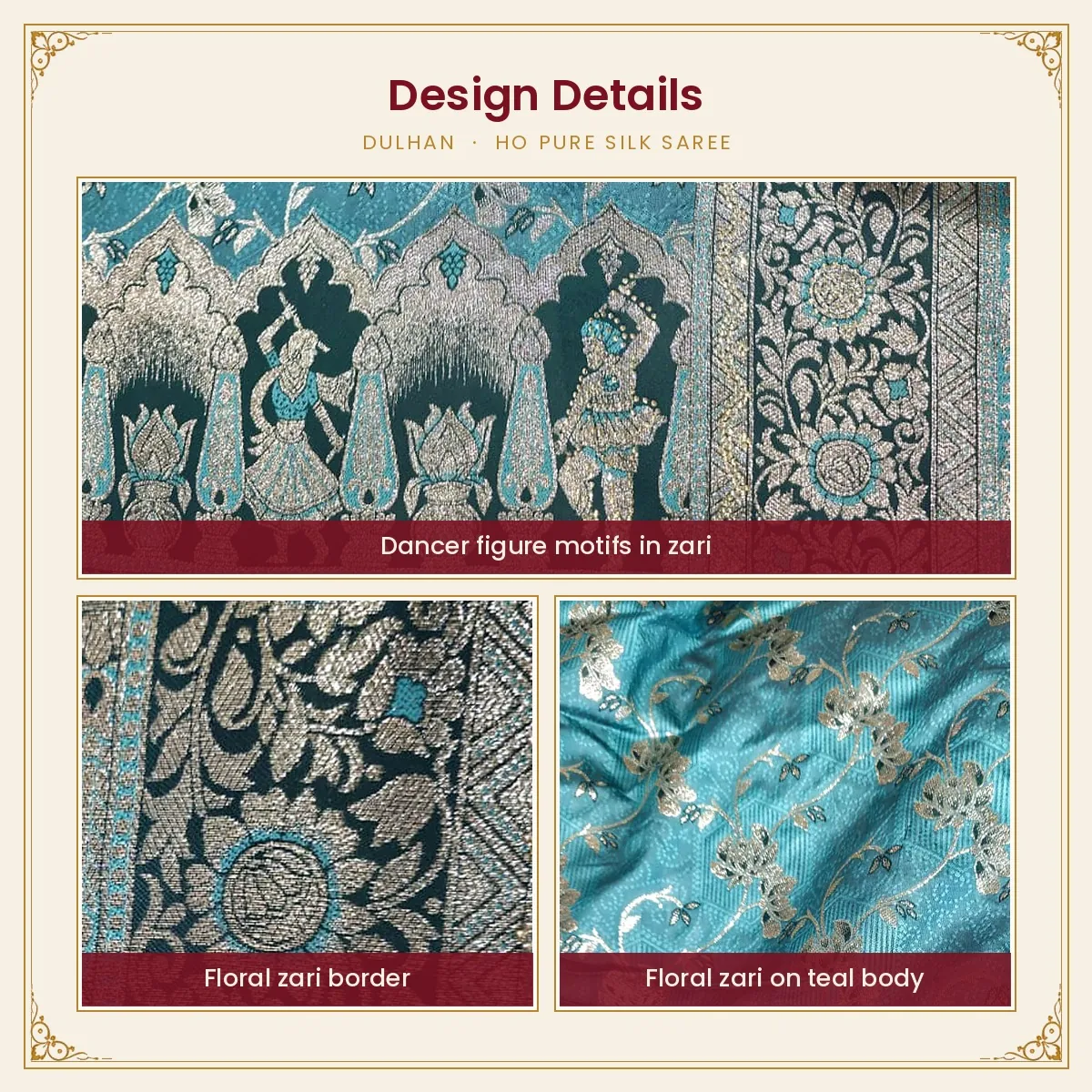
- Dry clean silk and zari sarees, especially the first time. Water and strong detergent can make colours run and dull the zari.
- Air it out first. After a long day, hang the saree in the shade for a few hours before folding it, so sweat and perfume dry out. Spray perfume on yourself before you drape, not on the silk.
- Treat diya oil and ghee stains quickly. Do not rub them. Dab gently with a dry tissue and take the saree to a dry cleaner as soon as you can.
- Iron on a low setting with a cotton cloth between the iron and the saree, and never press directly on zari.
- Store it in cotton or muslin, not plastic, in a dry cupboard. Re-fold your silk sarees every few months so the folds do not weaken the threads.
Diwali sarees at Mahavir Sarees, Rewari
If you are shopping in Rewari, these are the three newest sarees at our store in Bajaja Bazaar, with their current prices:
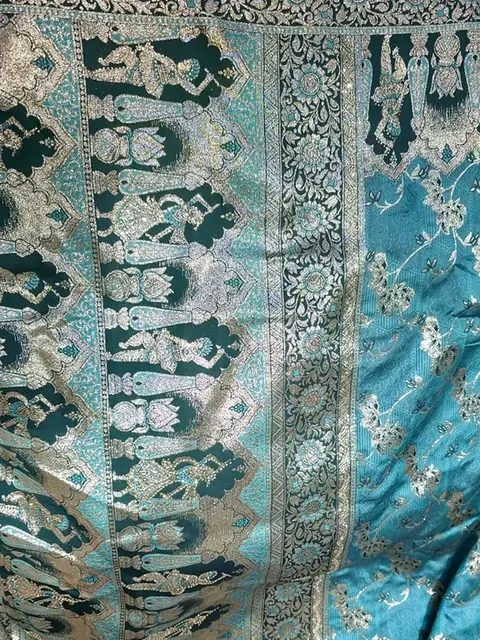
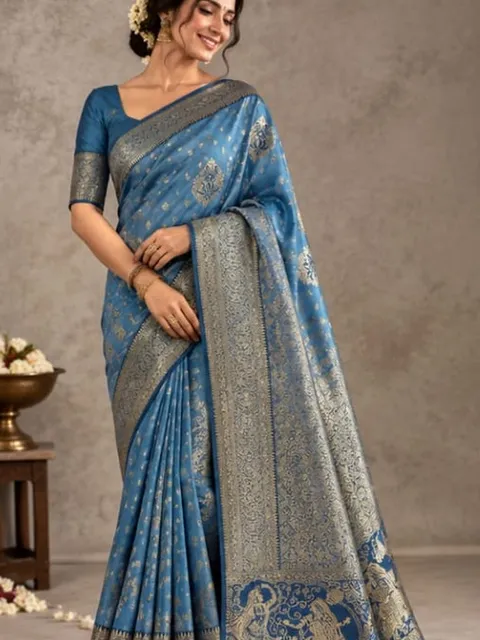
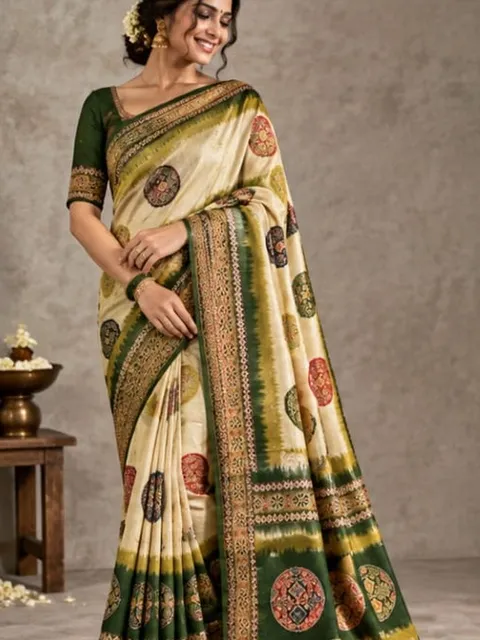
Which one for which day? Dulhan comes in Red, Rani, Yellow and Green, the classic Diwali colours, and its zari work suits Lakshmi puja and evening functions. Mastani, in five colours (Firozi, Rani, Green, Red and Yellow), has gold zari buttis and a wide woven border that look festive on a long day of family visits. Silsila, with its cream body and red and green patola-style motifs, is for someone who wants a festive look that is a little different from the usual red and gold.
New designs come into the shop regularly, so if you are looking for something specific, send us a screenshot on WhatsApp and we will tell you the rate and colours. Retailers and bulk buyers can ask us for wholesale rates.
Whatever you choose, wear it with comfort and confidence. Shubh Deepawali from all of us at Mahavir Sarees.
Visit our store in Rewari
Mahavir Sarees
Mahavir Chowk, Bajaja Bazaar, in front of Hanuman Mandir, Rewari, Haryana 123401
Mon–Sat 9:30 AM–8 PM · Sun 10:30 AM–6 PM
Call 093548 27020 · WhatsApp 99207 53269