
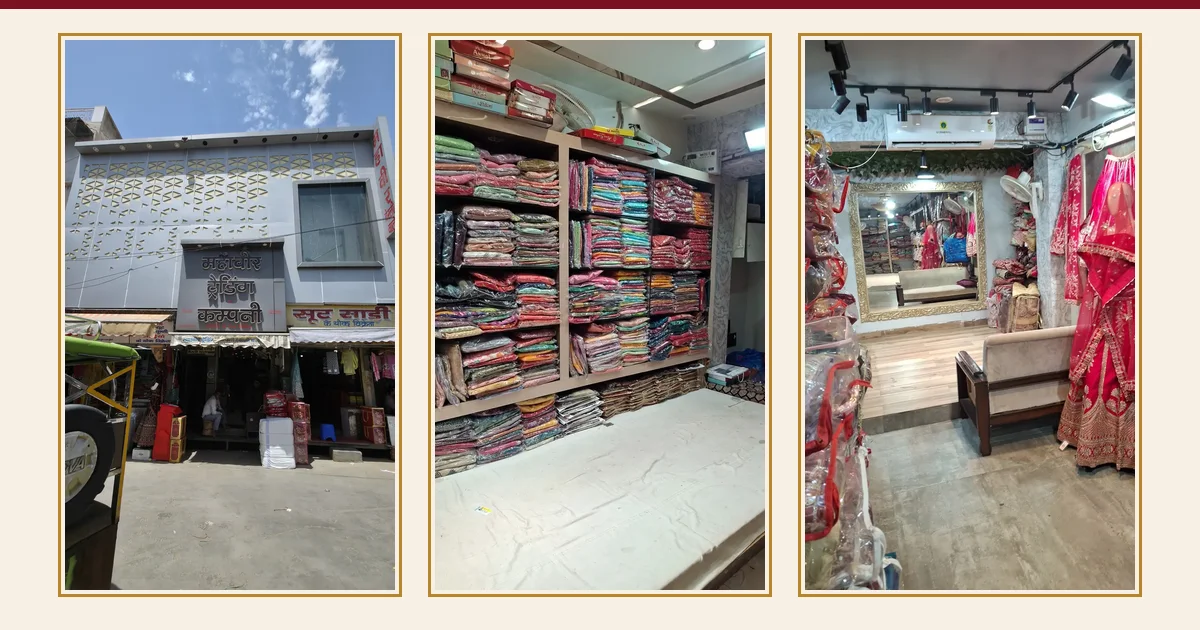
Banarasi silk is one of the most loved saree fabrics in India, and one of the most copied. Real silk with real zari takes time and skill, so it costs more to make. Imitations are made to look close in a shop, and they are not always easy to tell apart at a glance. Here are six simple checks you can do yourself, plus the questions to ask before you pay. Price is only one of them.
1. Look at the zari in daylight
Zari is the gold or silver thread in the border and the pallu. Real zari is made from metal thread, so it has a soft glow that changes a little as you move the saree. Imitation zari is often plastic or coated thread. It looks brighter and more even, almost like printed foil. Take the saree near a window or outside, not under a tube light, because tube light hides the difference.
2. Turn it over and check the back
In a good Banarasi brocade, the pattern shows on the reverse too, a little less sharp than the front. The loose threads are neatly tucked in. A printed saree looks flat on the back, and the design sits on the surface like paint. If you see long loose floats, cut ends or glue marks, be careful.
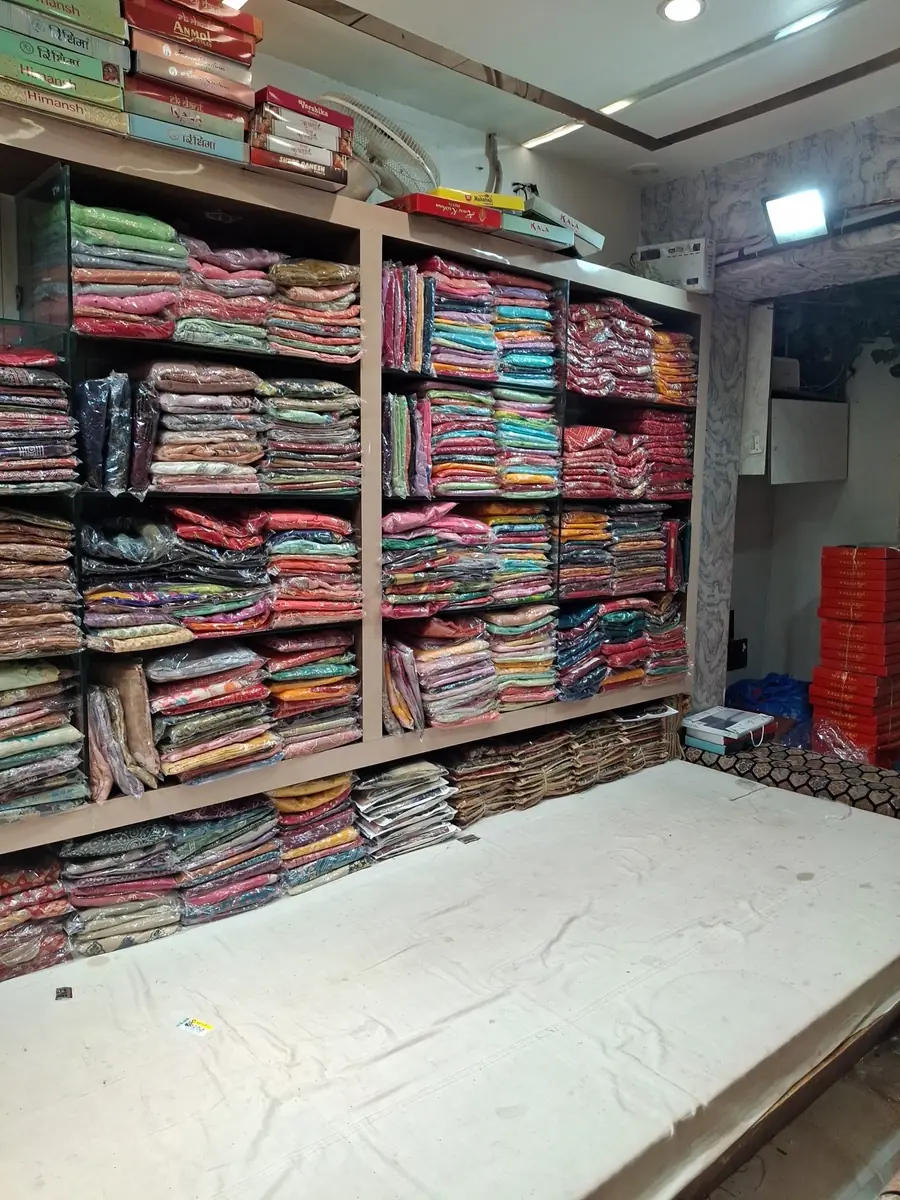
3. Feel the silk and watch it drape
Pure silk feels smooth and cool in the hand. Hold a pallu up and let it fall. Silk moves like cloth, and its sheen softens and shifts with the light. Many synthetic fabrics feel stiff or slippery, and they shine the same way from every angle. If the saree holds its shape like card, ask why.
4. Try the burn test, but only on a loose thread
Many families know the burn test. Pull one loose thread from the hidden inner edge, never from the front. Hold it with tweezers over a small flame for a second. Real silk burns slowly, smells like burnt hair, and turns into a black ash that crushes easily. Synthetic threads pull back from the flame, melt into a hard bead and smell of chemicals. Do this only with a thread you can spare, away from curtains and clothes, and never with the whole saree near a flame.
5. Look at the weave, not just the picture
A printed pattern on plain cloth looks neat, but it has no depth. Woven motifs stand up from the fabric, and the edges of a small flower or a border line have the slight variation that hand work has. Look closely at a motif from a short distance. If every line is perfectly sharp, like a picture on a screen, ask the seller how the saree was made.
6. Ask for the fabric details in writing
A good seller will not mind these questions, so ask them clearly:
- What is the saree made of: pure silk, a silk blend, or art silk?
- Is the zari real metal zari, or coated thread?
- Is it handloom or power loom?
- Can you write the fabric and weave on the bill or the tag?
If the answers are vague, or the seller avoids writing them down, that tells you something too.
What a good answer sounds like
A good seller answers in plain words. For example, if you ask whether the zari is real metal zari, a clear answer is a yes or a no, with the reason. If the seller says "it is all silk, do not worry", ask again and ask for the fabric in writing. You are not being rude. You are buying something you will wear for years, and a fair seller knows that.
Common mistakes buyers make
Most people who regret a saree purchase did one of these things:
- Buying under lights only. Shop lights are bright and warm, and they flatter almost any fabric. Check the colour and the zari again near a window.
- Trusting the tag alone. A tag is a start. Ask what is written on it, and check that the seller says the same thing out loud.
- Judging from one side. The front can look perfect while the back shows loose threads and glue. Always turn the pallu over.
- Buying in a hurry before a function. If the wedding or festival is close, give yourself time to compare two or three options. A rushed choice is hard to undo.
Price is not the only clue
A high price does not prove that a saree is real, and a low price does not prove that it is fake. Some shops charge for a name and very little for the weaving. But a Banarasi saree priced far below what the zari and the weaving should cost is a reason to look harder, not a bargain. Use price as the last check, after you have looked at the zari, the back and the drape.
A simple way to compare
Pick two sarees that look alike and check both with the same six steps. Look at them in the same light, feel them one after the other, and turn both over. The real one usually shows its quality in the back and the drape, not only in the front. Practice with a few sarees and the differences start to show.
Come and compare in person
The easiest way to learn the difference is to see sarees side by side. Visit our shop in Bajaja Bazaar, Rewari, and we will show you the zari, the back and the drape in daylight. Not in Rewari? Send a photo of the design on WhatsApp at 99207 53269, and we will reply with the rate and colours.
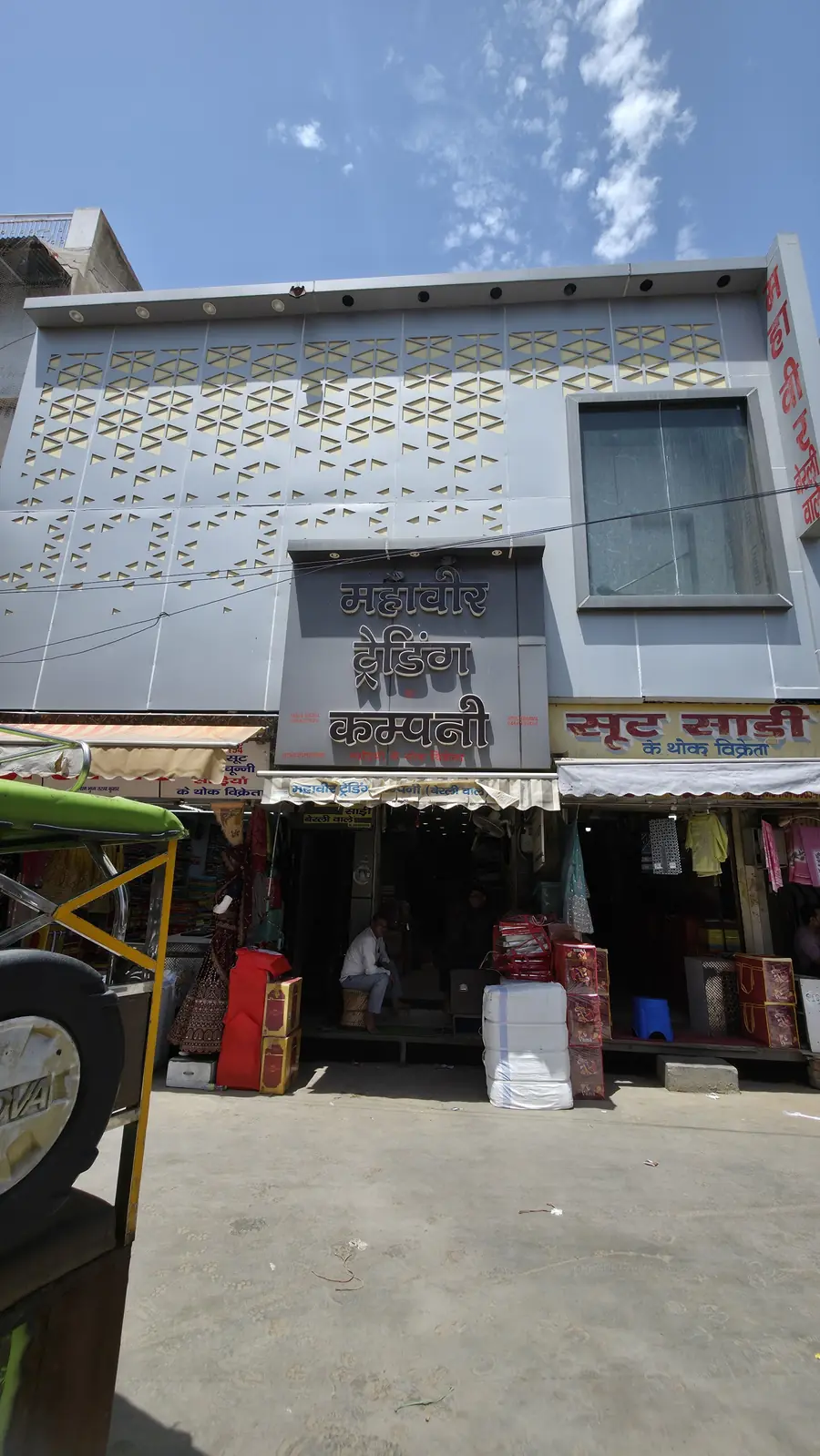
Visit our store in Rewari
Mahavir Sarees
Mahavir Chowk, Bajaja Bazaar, in front of Hanuman Mandir, Rewari, Haryana 123401
Mon–Sat 9:30 AM–8 PM · Sun 10:30 AM–6 PM
Call 093548 27020 · WhatsApp 99207 53269